
With My Own Hand
Ashley Douglas
Book of the Month: July 2026
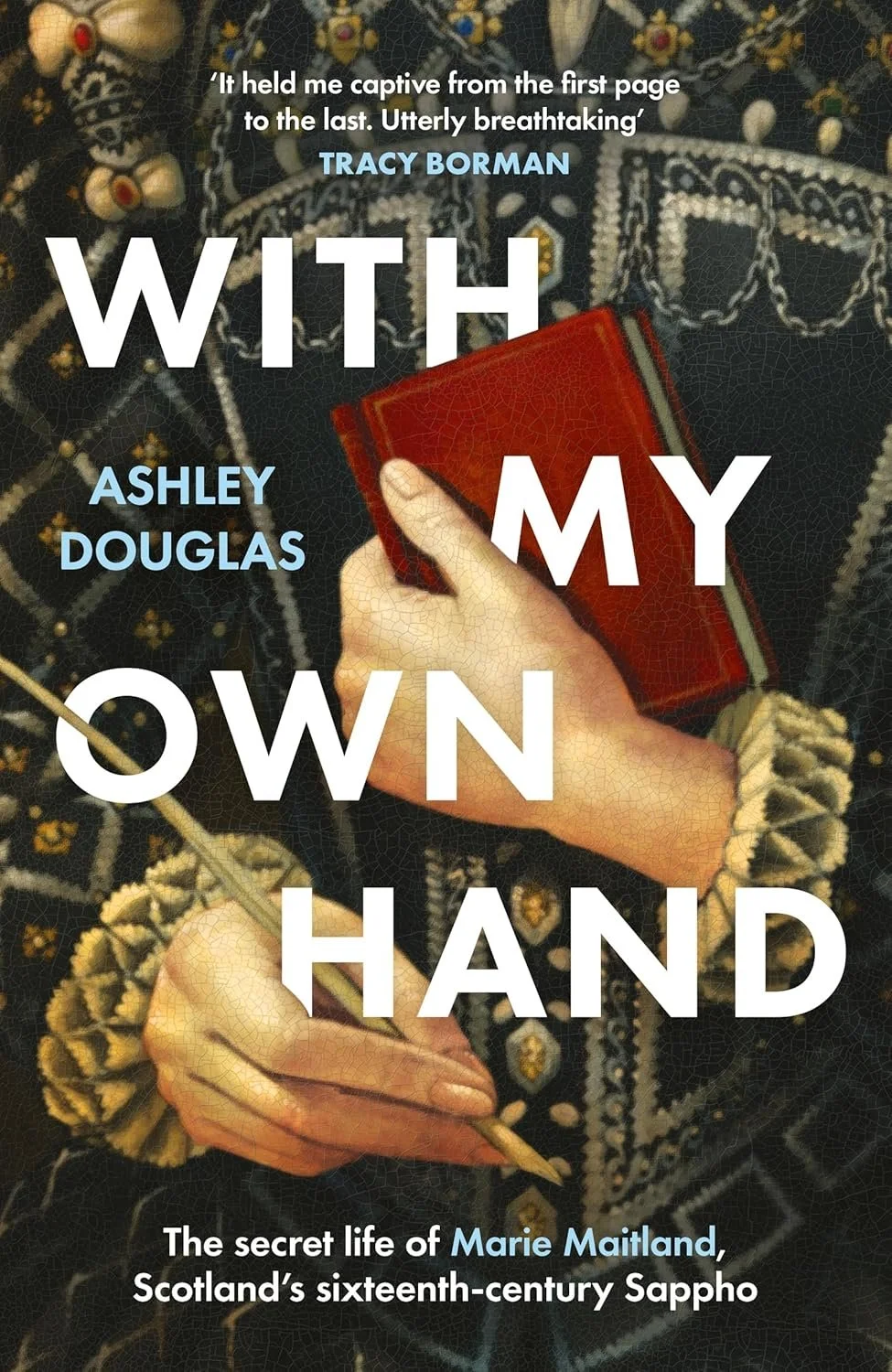
Reviewed by Sarah Orr
How many wonderful talents throughout history have we lost because they were, by grave misfortune, born women? With My Own Hand, by Ashley Douglas, aims to tell one of these forgotten stories. Marie Maitland, a sixteenth-century sapphic poet, was born into a wealthy family that was deeply embroiled in the politics of the day. She was the youngest of seven children, and when her father, an influential judge, poet and Keeper of the Privy Seal under Mary, Queen of Scots, lost his sight, she was tasked to become his secretary. While her sisters married and her brothers pursued successful careers in politics, she stayed at home, dedicating herself to her father’s work. By the time her father died, she had collated a collection of poetry including her father’s and other prominent male poets of the day. But this publication hides a secret: Marie’s own secret love poetry. Douglas discovers this and sets out to unearth the bravest poems of their time, written in the claustrophobic world of post-Reformation Scotland.
With My Own Hand is an important addition to the Scottish literary field and skilfully brings to life this long-buried story. Douglas recognises that our knowledge of Marie Maitland, albeit limited, is down to luck: had she been born into a less wealthy family, had her father not believed in educating his daughters, had he not gone blind and required a scribe, Marie would have had to marry as a teenager and might never have written these poems.
The most striking of these, Poem 49, receives significant attention in the book. Though anonymous, it is convincingly attributed to Marie, and is hard to read as anything other than a clear declaration of sapphic love. This, naturally, did not stop several early editors and scholars from labelling it a ballad of friendship. Grounded in readings of several primary texts, Douglas explores Marie’s unconventional life, situating her work within its political and historical context. Douglas’s comprehensive research and palpable passion create a compelling narrative that, despite being non-fiction, reads like a historical drama. She combines imagination with important political framing to paint a larger picture of the world in which Marie lived, where surviving records are scant.
If you are already knowledgeable about Mary, Queen of Scots, and the Reformation, you might find yourself wading through quite a lot of historical context, but this also makes it accessible to those unfamiliar with Scottish history. Douglas’s consistent translations and clear analysis of the poems dispel any apprehension for anyone inexperienced in reading Scots or picking apart sixteenth-century poetry.
Tragically, Marie’s story ends with much less independence than she had most of her adult life. She was married off, aged nearly 40, to a much younger man to aid her brother’s political aspirations. Ultimately, her presence in historical records is defined by her position to men: daughter, sister, and wife to powerful men. But it is her love for another woman and her poetic talents, now illuminated, which will have a stronger claim to her legacy. Despite Marie’s unfortunate marriage and untimely death, her love for another woman is celebrated here in a way it could never have been in their lifetimes. It is a beautiful reminder that women who love women have always been here.
Sarah Orr is a writer and master’s student. Her research focuses on contemporary Scottish literature, politics, and the Scots language.